• Skip to primary navigation
  • Skip to main content
  • Skip to primary sidebar

The Millennial Legacy

  • Education
  • Economy
  • Technology
  • Marketing
  • Investing
  • Social
  • Personal Finance
  • Calculator
  • Contact Us

Social

Top 10 Financial Influencers on TikTok in 2025: the Finfluencers who Guide Young Generations Through Money

May 7, 2025 By Emma

If you still think TikTok is just for dance trends and Gen Z humor, think again. In 2025, it’s one of the most powerful platforms for financial education, with millions of users turning to 60-second videos for advice on budgeting, investing, and building generational wealth. And behind the app’s endless scroll lies a new wave of social media content creators—finfluencers—who are reshaping how younger audiences learn about money.

What’s particularly interesting is who these creators are. Almost all of them are Millennials—now in their late 20s to early 40s—old enough to have navigated real-world financial hurdles, yet young enough to speak fluently in TikTok’s fast-paced, informal style. They’re bridging the gap between experience and relevance, turning years of hard-earned lessons into content that clicks.

Their followers are often even younger. Gen Z, now between the ages of 13 and 28, makes up a huge share of the platform’s user base and is hungry for relatable, digestible advice. They want someone who understands what it means to graduate into a shaky economy or hustle in a gig-driven job market. And they’re finding that guidance not from textbooks—but from TikTok.

Some of these creators bring credentials, others bring charisma, but they all share one thing: the ability to turn complex financial concepts into bite-sized, binge-worthy content. Here’s a look at the top financial influencers on TikTok in 2025—and how they’re helping a new generation make sense of money.

1. Erika Kullberg (@erikakullberg) – 9M Followers

Erika Kullberg

A former lawyer turned content powerhouse, Erika Kullberg , a 36-year-old Millennial is best known for her viral “Did you know?” videos that break down consumer rights, credit card fine print, and financial hacks. Her legal background adds authority, but it’s her delivery—calm, concise, and empowering—that keeps her audience hooked. For Millennials navigating adulthood’s financial pitfalls, Erika speaks their language: practical, protective, and smart.

2. Humphrey Yang (@humphreytalks) – 3.3M Followers

Humphrey Yang

If you’ve ever wanted a financial concept explained using candy or cardboard cutouts, you’ve probably seen Humphrey Yang, a 36-year-old Millennial. He’s mastered the art of simplifying investing, taxes, and inflation in under a minute. As a Millennial who has lived through the 2008 crisis, the crypto boom, and post-pandemic inflation, Humphrey bridges generations—speaking to Gen Z with Millennial realism.

3. Tori Dunlap (@herfirst100k) – 2.4M Followers

Tori Dunlap, a 31-year-old Millennial doesn’t just talk money—she talks mission. With a platform built around financial feminism, her TikToks empower women to negotiate, invest, and break free from paycheck-to-paycheck cycles. Her perspective resonates especially with younger Millennials and older Gen Zs who value financial independence as a form of activism.

4. Caleb Hammer (@calebhammercomposer) – 2M Followers

Caleb Hammer

Caleb Hammer, a 29-year-old Millennial brings the hard truth. Think of him as TikTok’s financial accountability coach—calling out bad spending habits and encouraging viewers to face their financial reality. His age puts him at the tail end of the Millennial spectrum, yet his tone and style click with Gen Z’s craving for authenticity over fluff.

5. Seth Godwin (@seth.godwin) – 1.8M Followers

Seth Godwin

Seth Godwin, a 35-year-old Millennial blends humor with real advice, offering a distinctly Millennial perspective on everything from credit scores to student loans. His content often goes viral thanks to its emotional resonance and Gen Z-friendly style, but it’s rooted in the lived experience of a generation burdened with debt and economic uncertainty.

6. Taylor Price (@pricelesstay) – 1.1M Followers

One of the youngest on this list, Taylor Price, a 25-year-old member of Gen Z represents the true Gen Z voice of personal finance. Her TikToks emphasize financial literacy, stock investing, and side hustles, all tailored to an audience that grew up during economic chaos. She makes finance aspirational without being out of reach.

7. Vivian Tu (@yourrichbff) – 1M Followers

Vivian Tu, a 31-year-old Millennial delivers sharp, confident, and refreshingly honest TikToks—fitting for someone who left Wall Street to become one of the most recognizable financial creators online. Her delivery is fast and savvy, echoing the style of her peers but with an insider’s edge. She bridges Millennial financial anxiety with Gen Z’s hunger for clear, actionable advice.

8. Steve Chen (@calltoleap) – 1M Followers

Steve Chen, a 35-year-old Millennial built his brand around his journey to financial freedom. A former engineer turned entrepreneur, he shares advice on side hustles, investing, and minimalist money habits. His Millennial mindset—shaped by recession, housing bubbles, and the gig economy—is embedded in every tip he gives.

9. Jasmine Taylor (@baddiesandbudgets) – 1M Followers

Jasmine Taylor, a 34-year-old Millennial made “cash stuffing” cool. Her budgeting method, rooted in old-school envelope systems, has sparked a viral movement among financially anxious Gen Zs and debt-conscious Millennials alike. Her story—from struggling with debt to building a business—is both relatable and aspirational.

10. Kenny (@kenny.finance) – 220K Followers

Though newer to the scene, Kenny, a 28-year-old on the Millennial–Gen Z cusp is quickly gaining traction for his no-nonsense videos on budgeting and wealth-building. As a Millennial speaking to a younger crowd, his mix of calm realism and motivational tone hits the right balance for those feeling overwhelmed by money.

More than just the messenger, the medium matters. TikTok’s short-form format has forced a shift from traditional financial education (think seminars and spreadsheets) to sharp, fast, and visual storytelling. This works especially well for younger viewers who might never read a finance blog—but will happily absorb 30 seconds of advice on saving $100 a week.

Finfluencers in 2025 aren’t just educators. They’re entertainers, therapists, big siblings, and reality-check machines all rolled into one. The best among them don’t just share tips—they teach mindset. And for generations who often feel left out of the financial system, that mindset shift can be everything.

Filed Under: Investing, Marketing, Personal Finance, Social Tagged With: Financial education, Tik Tok

From Finfluencers to Feeds: Social Media Reshapes Investment Decision-Making

May 5, 2025 By Emma

Not long ago, making an investment decision making process meant opening a brokerage account, calling a financial advisor, or poring over company reports and analyst recommendations. It was slow, methodical, and often intimidating. Today, for millions of investors, that same decision is made with a scroll and a swipe—through financial influencers on TikToks, Reddit threads, and YouTube thumbnails offering “Top 5 Stocks to Buy Now.”

Social media has radically transformed how people make investment decisions. It’s not just about access to information—though that’s certainly part of it—but about the context in which that information is delivered. Speed has replaced deliberation. Emotional cues now drive financial behavior. And for many investors, the crowd’s opinion holds more weight than an analyst’s.

This article explores how social media has disrupted traditional investment decision-making, reshaped behavior across age groups, and introduced a new set of risks and opportunities. We’ll compare today’s investor landscape with what came before—and ask whether the crowd’s wisdom is really wiser than the old-school playbook.

The Way It Was: A World of Experts and Patience

Before the rise of social media, investors largely relied on institutional guidance. Financial advisors, mutual fund managers, and legacy media like CNBC or The Wall Street Journal shaped the narrative. Data came from earnings reports, company filings, or trusted newsletters. Strategies emphasized long-term planning, diversification, and managing risk based on fundamental analysis.

The decision-making process was slower but more insulated from noise. Investors bought index funds, like the S&P 500 tracked blue-chip stocks, and measured performance over quarters or years—not days. There was little incentive to “act now” unless you worked on a trading floor.

Even online brokerage forums in the 2000s, like Bogleheads or Motley Fool, promoted caution and education. While chatrooms existed, the tone was subdued, and recommendations often came with disclaimers. The idea of making trades based on viral content would have been absurd.

The Shift: Social Media Takes Center Stage

That change began to take shape in the late 2000s but accelerated dramatically after the launch of mobile trading apps like Robinhood, which was founded in 2013 and launched to the public in March 2015. Robinhood helped popularize commission-free online trading and introduced a game-like user experience that appealed to a younger generation. This innovation helped normalize frequent trading among new investors and set the stage for the explosive growth of social-driven investing seen in the early 2020s.

Between 2018 and 2020, social media platforms like TikTok and YouTube began prioritizing short, algorithmically boosted content that favored engagement above all else—a shift that would soon extend to financial topics. By 2020, finance-related videos on TikTok, often tagged under #StockTok or #CryptoTok, were gaining millions of views. Finfluencers began regularly posting stock tips, cryptocurrency forecasts, and “passive income” ideas designed to go viral. The combination of fast-paced visuals, bold claims, and simplified explanations made investing feel both accessible and urgent—especially to a younger audience already accustomed to consuming content this way.

On YouTube, the trend began gaining traction around 2017, when financial influencers like Graham Stephan and Andrei Jikh started building large audiences with content focused on real estate, stock investing, and personal finance. Their channels grew steadily until 2020, when the COVID-19 pandemic, stimulus checks, and extra time at home fueled a surge in interest in personal finance and retail investing. The financial influencer, Graham Stephan currently has over 4.5 million subscribers, and his most viewed video—’How I Bought a Tesla for $78 Per Month’—has surpassed 10 million views. Andrei Jikh, whose style blends magic tricks with investing advice, has over 2.3 million subscribers, with his most popular video, ‘How to Invest in 2023 (Beginner’s Guide),’ drawing more than 4.5 million views.

Reddit’s r/WallStreetBets, founded in 2012, remained niche until late 2020. But in early 2021, it exploded into the mainstream during the GameStop short squeeze, effectively turning meme-based speculation into a global investing movement. As of 2024, the subreddit has over 13 million members, making it one of the largest and most influential financial communities on the internet.

The result? Investment decision processes that once relied on research and consultation now hinge on virality, confidence, and peer validation.

In a 2022 study from FINRA and NORC, 34% of investors aged 18–29 said social media was one of their most trusted sources of investing information. Even more striking, 8% of those aged 18–29 said they made their first-ever investment based on a tip from TikTok.

These platforms aren’t just delivering content. They’re shaping behavior. Research from the CFA Institute shows that Gen Z investors—typically defined as those born between 1997 and 2012—are more likely to trust online influencers than traditional financial institutions. Forty-eight percent of Gen Z investors say they invest “for fun,” and 44% admit to making investment decisions based on “gut instinct” or online excitement.

A separate 2023 survey by MagnifyMoney found that 59% of all investors who follow financial influencers on social media had made an investment based on that influencer’s recommendation. Of those, 36% later regretted their decision. The same study reported that younger investors (aged 18–34) were more than twice as likely as older investors to act on influencer advice without doing additional research.

Case Studies: GameStop, Dogecoin & Terra (LUNA)

Few events illustrate this transformation better than the GameStop saga of early 2021. A movement that began as a joke on r/WallStreetBets morphed into a global news story. Retail investors, fueled by a mix of anti-Wall Street sentiment and internet humor, drove GameStop shares from under $20 to over $400 within days. Hedge funds with short positions lost billions. It wasn’t just a market event—it was a cultural moment, complete with Reddit memes, TikTok explainer videos, and livestreams tracking the price in real time. Retail investors made up nearly 60% of GameStop’s trading volume at the peak.

The same year, cryptocurrencies saw a similar boom in social-driven trading. Dogecoin, a token initially created as a joke, surged over 15,000% from January to May 2021. The rally was propelled largely by Twitter posts from Elon Musk, TikTok trends, and Reddit speculation. There were no earnings reports or fundamentals to analyze—only hype.

Another example came with the rise and fall of Terra (LUNA) and its algorithmic stablecoin, UST, in 2022. Promoted heavily by crypto influencers on YouTube and Twitter, UST was marketed as a “safe” way to earn yields over 20%. When the peg broke in May, $60 billion in market value vanished in less than a week. Many retail investors who relied on influencer guidance were wiped out, often with little understanding of the risks.

Even YouTube has played host to “pump-and-dump” schemes disguised as financial advice. In late 2022, the SEC charged several YouTube influencers with fraud for using their platforms to manipulate stock prices, while failing to disclose their own financial interest in the stocks they promoted.

A Different Kind of Decision-Making

So what exactly has changed in how people make investing decisions?

First, there’s a shift from slow analysis to fast reaction. Social platforms are designed for immediacy. When you see a viral video saying “Buy this stock before the breakout,” there’s emotional urgency. That’s intentional. Social media algorithms reward engagement, not accuracy. As a result, users are trained to act quickly, sometimes impulsively.

Second, information is now framed socially rather than institutionally. Traditional investing advice came from vetted sources. Now, it often comes from charismatic personalities who may have no credentials—but do have high follower counts. Trust is built not on certification, but relatability.

Third, decision-making has become gamified. Many platforms use visual rewards (like confetti or green arrows) to reinforce trading activity. Apps like Robinhood, Webull, and Public have been criticized for turning investing into something more like playing Candy Crush than managing long-term wealth.

And finally, confirmation bias is amplified. On YouTube, TikTok, and Reddit, users tend to follow creators who share their views. That creates echo chambers where hype is reinforced, not questioned. In these spaces, skepticism can feel like betrayal—and that’s dangerous for financial decisions.

Age Still Matters

Although these behavioral changes impact investors across the board, younger investors are the most influenced.

Gen Z, which includes people aged 12 to 27 in 2024, and younger Millennials, now in their late 20s to mid-30s are digital natives. Both cohorts grew up in an online-first world, which has shaped how they consume information, build trust, and make decisions—including about money. They grew up trusting peer reviews, Reddit threads, and YouTube tutorials more than traditional authorities. It’s natural that they extend that same logic to money. When financial literacy is scarce, the next best thing seems to be a well-edited TikTok.

Older investors, like Gen X, now in their mid-40s to late 50s and Baby Boomers, now in their 60s to late 70s, tend to rely more on traditional methods—advisors, bank recommendations, or financial publications. But the lines are blurring. A growing number of Gen X and even Boomer investors are joining Facebook groups about investing, watching YouTube explainers, and dabbling in crypto. Still, age correlates strongly with risk tolerance and decision-making style: younger investors are more likely to chase high-growth assets, while older ones prioritize capital preservation.

Interestingly, the Charles Schwab 2022 Modern Wealth Survey found that 15% of investors under 35 have made trades based on social media content, compared to just 4% of those over 55. This doesn’t mean older investors aren’t influenced—but their triggers tend to be slower and less hype-driven.

Is This Change Good or Bad?

The democratization of investing is, in many ways, a triumph. Millions of people who were once excluded from markets now have access to tools, platforms, and communities that empower them. Financial education is more engaging than ever. And peer-driven spaces can reduce the intimidation factor that once came with investing.

But the shift also introduces real dangers. Emotional decision-making, misinformation, and herd behavior can lead to massive losses. Many social-first investors lack a clear understanding of risk, diversification, or tax consequences.

As platforms continue to blur the lines between entertainment and financial advice, it’s critical for investors—especially younger ones—to develop internal filters. Who is giving this advice? What are their incentives? Is this entertainment or strategy? That level of discernment has never been more important.

The bottom line is: the challenge isn’t tuning out social media. It’s learning how to use it without being used by it.

Filed Under: Investing, Social Tagged With: Tik Tok, youtube

Gen Z Takes Over TikTok – A Generational Breakdown of the Most Popular TikTok Accounts

April 7, 2025 By Emma

When it comes to TikTok, one thing is crystal clear: Generation Z has firmly taken the reins. As the platform continues to soar in popularity, the youngest generation in the digital age, born roughly between 1997 and 2012, is shaping the app’s content and driving its viral trends. Whether it’s viral dance moves, hilarious skits, or heartwarming moments, Gen Z has made TikTok their own playground.

Unlike platforms like X and Instagram, where Millennials dominate, TikTok has become a space where Gen Z excels. While Millennials thrive on X with personal branding and global influence, and are also dominating Instagram, TikTok’s fast-paced, short-form videos are the perfect fit for Gen Z’s creativity and quick consumption habits. This generational difference in platform dynamics showcases how each generation has found its own niche in the social media landscape.

Of the top 10 most-followed TikTok accounts, a significant 70% of the creators belong to Generation Z. These young content creators have mastered the art of using short-form video content to capture attention and build massive followings. But what makes TikTok so appealing to this generation? And how are the content creators shaping the platform? Let’s break it down from a generational perspective and explore which creators belong to which generation and the type of content they’re producing.

Generational Breakdown of the Top 10 Most-Followed Accounts on TikTok:

  • Generation Z (born between 1997 and 2012): 7 accounts
  • Millennials (born between 1981 and 1996): 2 accounts
  • Generation X (born between 1965 and 1980): 1 account
  • Baby Boomers (born between 1946 and 1964): 0 accounts – Looks like TikTok hasn’t quite caught the attention of the Baby Boomers just yet! Guess they’re still figuring out how to send a text.

With these stats, it’s clear that Generation Z dominates the platform, but Millennials and even a member of Generation X have still found their place among the most-followed accounts. Let’s take a closer look at the creators who are making waves on TikTok, starting with the Gen Z leaders.

1. Khaby Lame: The King of Simplicity (Gen Z)

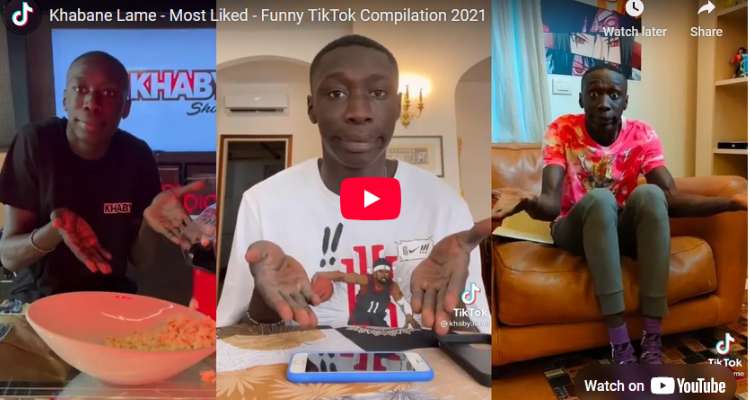
Born in 2000, Khaby Lame is the epitome of Gen Z’s humor, with over 162 million followers. His no-nonsense reaction videos have made him an internet sensation, simplifying absurdly complicated life hacks with just a gesture and a look of exasperation. His minimalist approach has made him a global icon, with his content consistently striking a chord with viewers who value authenticity and simplicity.

Khaby’s most-watched video showcases his signature style: simplifying the overly complex task of opening a banana by demonstrating the simple way of peeling it from the bottom. This video perfectly captures why his straightforward, humorous take on everyday tasks has earned him millions of fans.

2. Charli D’Amelio: The Dance Queen (Gen Z)

Charli D’Amelio, born in 2004, is arguably the most famous Gen Z TikTok personality. With 157 million followers, she became a star after posting viral dance videos, particularly to trending songs. Her content is fun, energetic, and always in sync with the latest trends. Charli exemplifies Gen Z’s penchant for fast-paced, highly engaging content that often incorporates viral challenges and collaborative trends. Her success highlights the rise of internet fame and the potential for a single viral moment to transform a young creator into a mainstream influencer.

3. MrBeast: The Gen Z Entrepreneur (Gen Z)

Born in 1998, MrBeast (Jimmy Donaldson) is a standout Gen Z creator who has mastered the TikTok game, amassing 115 million followers with his elaborate challenges, philanthropy, and creative video stunts. His content is centered around generosity, as he often gives away massive amounts of money to participants or random strangers. MrBeast’s TikTok is an extension of his larger YouTube success, where his content is designed to entertain, surprise, and give back. His entrepreneurial mindset and attention to viral content make him one of the most influential creators on the platform.

4. Bella Poarch: The Lip Sync Legend (Gen Z)

Bella Poarch, born in 1997, quickly became a TikTok sensation after her lip-sync videos, particularly her iconic video to the song “Sophie Aspin Send,” garnered millions of views. With over 94 million followers, Bella’s account focuses on fun, catchy, and often humorous content, including lip syncs, challenges, and personal moments. Bella represents Gen Z’s love for creative self-expression through viral music and short, impactful videos that often go beyond mere entertainment to create cultural moments.

5. Addison Rae: The Gen Z Star with Hollywood Dreams (Gen Z)

Addison Rae, born in 2000, has over 88 million followers on TikTok and is a true Gen Z influencer. Initially famous for her dance moves and lip-sync videos, Addison has branched out into acting and music. She embodies Gen Z’s tendency to leverage social media success into other career opportunities, particularly in the entertainment industry. Her content is diverse, featuring lifestyle vlogs, dance videos, and collaborations with other influencers, showcasing her ability to evolve with the trends while staying true to her roots.

6. Kimberly Loaiza: The Rising Star (Gen Z)

Born in 1997, Kimberly Loaiza has become one of TikTok’s biggest stars, with 83 million followers. Known for her beauty and lifestyle content, it’s her ability to share relatable family moments, fashion tips, and trends that has really connected with her audience. Although she’s officially part of Gen Z, Kimberly is close in age to Millennials, which gives her a unique ability to appeal to both generations. She effortlessly blends her personal life with her brand, offering followers a sense of being part of her world. Whether it’s a casual outfit or a peek into her everyday life, her content resonates with fans across the age spectrum, making her one of the most engaging influencers on the platform.

7. Zach King: The Master of Illusion (Millennial)

Born in 1990, Zach King is the first Millennial to make an appearance on the list, and he’s certainly made his mark with his mind-bending “magic vines” and visual illusions. With 82 million followers, Zach has turned short-form video content into an art form, showcasing jaw-dropping tricks that leave viewers amazed. His videos demonstrate the creative potential of TikTok, where visual effects and innovation come together to captivate audiences. Zach’s success is a prime example of how Millennials have mastered the art of blending technology and storytelling, using the platform to craft visually compelling narratives that continue to spark wonder and creativity.

8. Dwayne “The Rock” Johnson: The Gen X Entertainer (Gen X)

Dwayne Johnson, born in 1972, represents a rare but important presence from Generation X on TikTok, with 77 million followers. The Rock has used TikTok to share behind-the-scenes glimpses of his life, promote his projects, and connect with his massive fan base. His content is a blend of fitness motivation, personal anecdotes, and brand promotion. While he is older than most of the top influencers, his ability to adapt to TikTok’s fast-paced environment demonstrates that even Gen X can thrive on the platform.

9. Dominik Lipa: The Gen Z Creator with a Diverse Fanbase (Gen Z)

Dominik Lipa, born in 2001, represents the new wave of Gen Z influencers. With over 77 million followers, his content spans various genres, from dancing and lip-syncing to more intimate vlogs. Dominik’s ability to evolve and create relatable content that resonates with his primarily young audience shows how TikTok is being used by Gen Z to share their lives in a creative and impactful way.

10. CZN Burak: The Chef Who Captivates the World (Millennial)

CZN Burak, born in 1996, is a Turkish chef who has gained a huge following on TikTok, amassing 75 million followers. His content features cooking tutorials with a signature twist—he engages his audience with his infectious personality, often smiling directly at the camera while preparing dishes. CZN Burak represents the Millennial generation’s flair for creativity and social media branding, using TikTok to promote his culinary skills and entertain a global audience.

As Gen Z continues to dominate TikTok, one question remains: Will the next generation, Generation Alpha (Gen A), take over the platform, or will they shift their attention to something new? With Gen A growing up in a world even more saturated with technology and new platforms, it will be interesting to see if they reinvent how we engage with social media or perhaps dominate a completely new platform we haven’t yet imagined. Only time will tell! In the meantime, they’re already inventing their own vocabulary. Here’s our guide to Gen Alpha slang.

Filed Under: celebrities, Social Tagged With: Tik Tok

Millennials Reign on X – A Generational Breakdown of the Top 10 Most-Followed Twitter Accounts

February 13, 2025 By Emma

Let’s be real: X (formerly Twitter) has long been a digital battleground where celebrities, athletes, and politicians fight for influence, but there’s one group that’s leading the charge—Millennials. While the platform hosts users of all ages, the majority of the most-followed accounts belong to Millennials – those born between 1981 and 1996. So, let’s take a closer look at how the Millennial generation is holding court on X and what this means for the platform’s cultural landscape.

Of the top 10 most-followed accounts on X, Millennials dominate with a solid 60% of the list. This generation, known for their digital fluency and entrepreneurial spirit, has mastered the art of leveraging social media for everything from personal branding to global influence. But before we dive into the details, let’s look at how the generations break down among the top accounts.

Generational Breakdown of the Top 10 Most-Followed Accounts on X:

  • Millennials (born between 1981 and 1996): 6 accounts
  • Baby Boomers (born between 1946 and 1964): 3 accounts
  • Generation X (born between 1965 and 1980): 1 account

With these stats in mind, it’s worth noting that, alongside the Millennial dominance on X, the relatively strong presence of Baby Boomers stands out. This contrasts sharply with platforms like Instagram, where Baby Boomers have virtually no representation in the top 10, and younger generations clearly take the lead. Interestingly, while Generation Z is represented by two accounts in Instagram’s top 10, they don’t have a single account in X’s top 10. This highlights an intriguing generational shift in social media: X seems to attract older generations like Baby Boomers, while Instagram leans toward Gen Z, with both platforms heavily influenced by Millennials.

With these stats in mind, let’s highlight the stars who have taken X by storm and explore how they’ve harnessed the power of the platform to engage their audiences.

1. Elon Musk: The Millennial-Gen X Hybrid

Elon Musk, born in 1971, belongs to Generation X by age, but his digital savvy and business ventures firmly place him in the Millennial conversation. With over 217 million followers, Musk’s influence spans not just social media, but industries like technology, space exploration, and electric vehicles. His mastery of Twitter’s real-time updates and his role in the evolution of the platform have made him a defining figure of the modern digital era.

2. Barack Obama: The Baby Boomer Who Speaks to Millennials

Barack Obama, born in 1961, is part of the Baby Boomer generation, yet his messages on X resonate deeply with Millennials. With over 130 million followers, Obama uses the platform to promote social causes, share thoughts on global events, and maintain his cultural relevance. His appeal to younger generations comes from his focus on hope, change, and unity—values that Millennials resonate with in today’s climate.

3. Cristiano Ronaldo: The Millennial King of X

Born in 1985, Cristiano Ronaldo is the epitome of Millennial fame. With over 114 million followers on X, he has used the platform not just to showcase his world-class athleticism, but to establish himself as a global brand. His posts, which mix training, philanthropy, and family moments, highlight his immense commercial appeal. But Ronaldo’s influence doesn’t stop there—he’s also the most-followed person on Instagram, with over 674 million followers, cementing his position as a digital superstar. Ronaldo’s social media presence perfectly illustrates how Millennials have redefined celebrity, transforming it into a multi-faceted, media-savvy empire that reaches far beyond the sports arena.

4. Justin Bieber: Millennial Music Icon

With 109 million followers, Justin Bieber’s Twitter presence is an extension of his music career and personal life. Bieber, born in 1994, has been a fixture on X for years, sharing everything from music releases to personal reflections. His authenticity and connection with fans have allowed him to stay relevant throughout his career, making him one of the platform’s most powerful Millennial influencers.

Justin Bieber’s social media influence extends far beyond X. On Instagram, he boasts over 270 million followers, making his account the 10th most-followed on the platform, where he shares a blend of personal moments, family photos, and music updates. Additionally, he has a significant following on TikTok, where his fun, engaging videos and behind-the-scenes glimpses continue to connect with younger audiences. Bieber also commands a massive presence on YouTube, with over 70 million subscribers to his official channel, where he posts music videos, exclusive content, and personal reflections, further solidifying his status as a global icon across multiple digital platforms.

5. Rihanna: The Millennial Mogul

Rihanna, born in 1988, exemplifies Millennial entrepreneurship. With 108 million followers, she has used X to promote her music, beauty line, and humanitarian efforts. Her tweets blend personal moments with business updates, giving her followers a front-row seat to her multifaceted career. Rihanna’s ability to merge cultural influence with entrepreneurial success has solidified her place as one of the most-followed figures on X.

6. Katy Perry: A Millennial Superstar on X

Katy Perry, born in 1984, is another Millennial who has mastered the art of building a global brand through X. With 105 million followers, Perry uses the platform to engage with fans, promote her music, and share her personal life. Her fun, quirky personality shines through her posts, allowing her to maintain a loyal following and reinforce her position as one of the most influential Millennial figures on the platform.

7. Narendra Modi: The Millennial-Influenced Baby Boomer Politician

Though Narendra Modi was born in 1950, making him part of the Baby Boomer generation, his savvy use of X to connect with younger generations is undeniable. With 104 million followers, Modi has embraced social media as a vital tool for political campaigning and public engagement, ensuring his message resonates with a younger, tech-savvy audience.

8. Donald Trump: The Controversial Millennial-Focused Baby Boomer

Donald Trump, a Baby Boomer born in 1946, gained millions of followers during his political career, which peaked with his re-election as president for a second term. His use of X has been a major influence on shaping political discourse and media strategies, particularly with younger voters. His tweets, often controversial and direct, are part of what made him a divisive but influential figure on the platform, drawing attention from Baby Boomers, Millennial and Gen Z audiences alike.

9. Taylor Swift: The Millennial Queen of X

Taylor Swift, born in 1989, is the epitome of Millennial influence on X. With 94 million followers, Swift has used the platform to build an incredibly loyal fan base, sharing updates on her music, social causes, and personal life. Her ability to connect with her audience through both public moments and intimate reflections solidifies her status as one of the most powerful Millennial figures on the platform.

10. Lady Gaga: The Millennial Icon

Lady Gaga, born in 1986, rounds out the list with 82 million followers. Gaga has used X to promote her music, activism, and advocacy for mental health. Her posts often mix personal messages with professional milestones, keeping her followers engaged and connected to her brand. Her influence on X and culture at large makes her one of the most significant Millennial figures in the digital space.

As we can see, Millennials are clearly leading the charge on X. With 6 out of the top 10 most-followed accounts belonging to this generation, it’s clear that their influence on the platform cannot be overstated. Whether it’s through music, politics, or sports, Millennials have proven that they know how to use social media to engage, influence, and connect with a global audience. So, here’s to the Millennial dominance on X. With their authenticity, entrepreneurial spirit, and cultural relevance, it’s safe to say that this generation has claimed their seat at the top of the digital world.

Filed Under: celebrities, Social Tagged With: Twitter, X

Millennials Are Dominating Instagram (Sorry, Gen X and Gen Z)

January 23, 2025 By Emma

Let’s face it: Instagram is basically the Millennial’s playground. With over 2 billion active users, Instagram has become the ultimate digital space for celebrities to shape culture, promote brands, and share their glamorous lives. But if we’re being real, when it comes to ruling the platform, it’s Millennials who have the largest share of the crown.

If you’ve ever wondered why it feels like every other Instagram post is a perfectly curated photo or a viral dance challenge, it’s because Millennials – those born between 1981 and 1996 – have mastered the art of this platform. Their influence stretches from pop culture icons to global entrepreneurs and activists. So, let’s take a look at the top 10 most-followed people on Instagram and see how much control this generation actually has over the platform.

When we break down the top 10 most-followed Instagram stars, it’s clear that Millennials are dominating. Of the top 10, a total of 6 are Millennials (born between 1981 and 1996), making up a solid 60% of the list! Gen Z is represented by 2 of the stars, with Kylie Jenner and Justin Bieber leading the charge for that generation. And while Gen X is represented by Kim Kardashian (born in 1980) and Dwayne “The Rock” Johnson (born in 1972), both of them have that undeniable Millennial appeal. Kim, in particular, may be Gen X by birth, but her social media savvy, entrepreneurial spirit, and cultural impact firmly place her in the Millennial camp in terms of influence.

Now that we’ve set the stage, let’s dive into the stars who are leading the charge on Instagram, starting with the top contender and his massive following.

1. Cristiano Ronaldo: The Millennial King of Instagram

Source: Ronaldo instagram page

Born in 1985, Cristiano Ronaldo is one of the most famous athletes in the world, and he’s also the most-followed person on Instagram. With a staggering 674 million followers, Ronaldo has transcended football stardom and become a global brand. He uses Instagram not just to share his training routines and family moments but to build his own empire, from advertising luxury brands to promoting his own CR7 fashion line. The influence he wields is so massive that it’s safe to say no one else is getting as much Instagram love as Ronaldo, who’s leading the pack.

2. Lionel Messi: Millennial Magic on the Field (and the ‘Gram)

Source: Messi Instagram page

Next up, we have Lionel Messi—born in 1987 and another Millennial powerhouse—who sits in second place with 505 million followers. Messi’s Instagram is a blend of football highlights, family life, and the occasional post celebrating his humble lifestyle. Just like Ronaldo, Messi’s fame stretches far beyond the sport he plays. But while Ronaldo is the Instagram king in terms of followers, Messi’s genuine and down-to-earth persona makes him beloved worldwide. The two soccer giants have found a perfect space on Instagram, capturing the attention of millions across the globe.

3. Selena Gomez: The Millennial Queen of Instagram

Selena Gomez—born in 1992—is the definition of Millennial stardom. With over 422 million followers, she’s one of the most influential people on Instagram. Selena’s posts range from glamorous photoshoots to mental health advocacy. She’s used her platform to speak about the importance of self-care, highlight important causes, and connect with her fans on a personal level. Oh, and let’s not forget her role as the face of many beauty and fashion brands. Whether she’s posting selfies, promoting her music, or simply sharing moments of her life, Selena has mastered the art of keeping her audience engaged.

4. Kylie Jenner: Gen Z? Maybe. Instagram Superstar? Definitely.

Source: Kylie Jenner Instagram page

Here’s where things get interesting. Kylie Jenner, born in 1997, is officially a Gen Z. But with her over 395 million followers, she’s still managed to capture Millennial-level influence on Instagram. Kylie revolutionized beauty and social media, making “self-made” a buzzword when she built her cosmetics empire. Her Instagram is a mix of family photos, stunning selfies, and behind-the-scenes glimpses of her business ventures. And while her business success may be a Gen Z feat, it’s fair to say that Millennials paved the way for social media moguls like her, so we’re still claiming some of the credit.

5. Dwayne “The Rock” Johnson: Gen X, but a Millennial Favorite

Dwayne “The Rock” Johnson was born in 1972, which puts him in Generation X. But in case you haven’t noticed, he’s got that Millennial energy. With 395 million followers, The Rock is the epitome of how Gen X can merge with Millennial culture. His Instagram is a happy mixture of motivational posts, family moments, and his career updates. Whether he’s sharing his workout routine or promoting his tequila brand, Johnson has managed to position himself as a Millennial favorite despite being a Gen X-er himself. In fact, he’s even joked about considering himself a “Millennial trapped in a Gen X body”—and hey, we can get behind that.

6. Ariana Grande: A Millennial Superstar

Born in 1993, Ariana Grande is one of the most influential musicians of her generation. With over 376 million followers, her Instagram is an endless scroll of promotional posts, selfies, and love for her fans. What makes Ariana so special on Instagram is her ability to be both personal and glamorous, sharing everything from the latest album news to candid moments with her friends. She’s the perfect mix of relatable and untouchable—something that Millennials have perfected.

7. Kim Kardashian: Gen X, but with Millennial Appeal

Source: Kim Kardashian Instagram page

Okay, Kim Kardashian is technically Gen X, born in 1980. But let’s not forget, she often refers to herself as a Millennial, too. With 358 million followers, Kim has turned Instagram into her own personal business platform. Her account is a masterclass in self-promotion, where she flaunts her family, fashion, and her ever-growing business empire. From her SKIMS brand to her advocacy work, Kim has solidified her spot as one of the most influential women of any generation. Even if she’s Gen X by birth, her Instagram game speaks Millennial—and she’s done more than enough to claim her place in the Instagram Hall of Fame.

8. Beyoncé: Millennial Royalty

There’s no question that Beyoncé is an icon. Born in 1981, she is at the very beginning of the Millennial generation. With 313 million followers, Beyoncé continues to set trends, from her music releases to her fashion choices. She’s the epitome of cool, confidence, and cultural impact, and her Instagram is a blend of artistic visuals and glimpses into her personal life. Beyoncé represents the Millennial ability to fuse pop culture with activism, and that’s why her following continues to grow.

9. Khloé Kardashian: A Millennial Mogul

Khloé Kardashian, born in 1984, is another Millennial on the list. With 304 million followers, she’s not just known for her reality TV presence, but also for her entrepreneurial ventures, including her fashion line and fitness brand. Like her sisters, Khloé has built an empire with Instagram as her primary tool for engagement. Whether she’s posting workout tips or family moments, Khloé’s authenticity resonates with her audience, and it’s why she continues to be a top influencer.

10. Justin Bieber: Millennial Music Sensation

Finally, we have Justin Bieber, born in 1994. With 294 million followers, Justin has been a staple on Instagram for over a decade. His account features a healthy mix of music promotions, family moments, and reflections on his journey to self-discovery. Bieber’s ability to share personal milestones has helped him maintain a devoted fanbase throughout the years. He may have started as a teen idol, but he’s grown into a respected artist—and his Instagram following is proof of his lasting influence.

While Instagram is home to a mix of celebrities from all generations, it’s clear that Millennials are running the show. From football players to musicians and beauty moguls, this generation has taken over the platform with authenticity, business savvy, and cultural influence. Of course, we can’t completely ignore Gen Z, who are bringing their own energy to the space, or Gen X, who have paved the way for many Instagram stars. But when it comes to follower counts and sheer influence, Millennials have earned their spot at the top.

So, let’s give it up for the generation that’s been killing it online: Millennial Instagram dominance is here to stay.

Filed Under: celebrities, Social

Millennial Generation (Gen Y): Years, Ages & Traits in 2026

January 26, 2019 By Emma

A young man in a cap working on a laptop and checking his phone at a café window
Photo: Muhammad Raufan Yusup

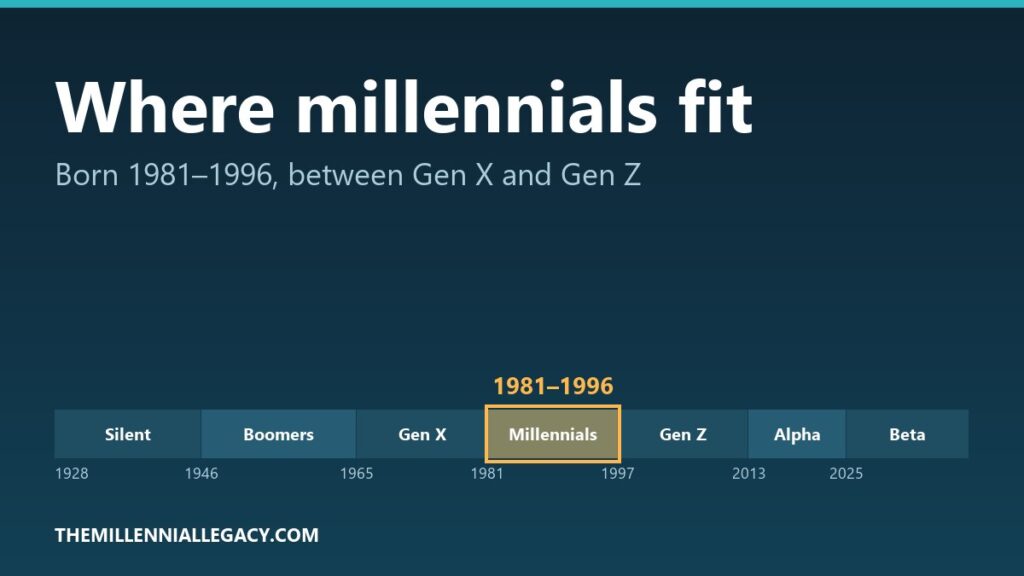
The millennial generation, also called Generation Y or Gen Y, is made up of Americans born from 1981 to 1996, according to Pew Research Center. Millennials turn 30 to 45 in 2026. With about 74.2 million people in mid-2024, by our estimate from Census Bureau data, they’re the largest generation in the United States, a little more than 1 in 5 Americans.

2026 is a turning point: the youngest millennials turn 30 this year. The generation that spent two decades as shorthand for “young people” is now entirely in its 30s and 40s, buying first homes at record-late ages and raising the next generation. Here’s who counts as a millennial, how old they are, what shaped them and where they stand with money.

Timeline of US generations highlighting millennials, born 1981 to 1996

Millennial years: which birth years count?

There’s no official definition. The Census Bureau officially designates only the baby boomers. So the millennial years depend on who you ask:

Source Millennial (Gen Y) birth years Notes
Pew Research Center 1981–1996 The most-cited US definition, set in 2018
U.S. Census Bureau (2015 release) 1982–2000 Used to report that millennials had outnumbered boomers
McCrindle Research (Australia) 1980–1994 Gen Y, based on Australian birth-rate data
Early “Gen Y” usage (TIME) 1980–2000 Before “millennials” caught on
Redfin housing research 1981–1996 Matches Pew

The core everyone agrees on: 1982 to 1994. If you were born in those years, every definition above calls you a millennial. The edges are where it gets murky. Some people born around 1980 to 1981 feel more like Gen X. People born from about 1993 to 1998 often relate to both millennials and Gen Z, and many call themselves zillennials.

How old are millennials in 2026?

Born Turns in 2026 Born Turns in 2026
1981 45 1989 37
1982 44 1990 36
1983 43 1991 35
1984 42 1992 34
1985 41 1993 33
1986 40 1994 32
1987 39 1995 31
1988 38 1996 30

So the millennial age range in 2026 is 30 to 45. Ages are as of your birthday this year. Not sure where you land? Enter your birth year below.

Generation Calculator


What does that mean?

How big is the millennial generation?

By our estimate, about 74.2 million Americans were millennials on July 1, 2024. That’s 21.8% of the population and more than any other generation:

Generation (Pew years) Population, mid-2024 Share of US
Millennials (1981–1996) about 74.2 million 21.8%
Gen Z (1997–2012) about 70.6 million 20.8%
Baby boomers (1946–1964) about 68.0 million 20.0%
Gen X (1965–1980) about 65.7 million 19.3%

Method: we summed the Census Bureau’s Vintage 2024 single-year-of-age estimates, counting half of each edge year.

Millennials first passed the boomers in 2019, according to Pew. Young immigrants keep adding to the millennial ranks, while the boomer population shrinks with age. By mid-2024, millennials outnumbered boomers by about 6 million.

Where the name “millennials” came from

The writers William Strauss and Neil Howe used the term “millennials” in their 1991 book Generations, and the name stuck, TIME recounts. Merriam-Webster also dates the noun to 1991. The name points to the new millennium, which arrived as the oldest millennials were reaching adulthood.

Generation Y followed the alphabetical pattern set by Gen X and was used for people born from about 1980 to 2000. The two names are interchangeable today, though “millennials” won out in everyday use.

Funny enough, many millennials never liked the label. In a 2015 Pew survey, only 40% of adults ages 18 to 34 considered themselves part of the “Millennial generation,” and 33%, mostly older millennials, identified with Gen X instead. Millennials were also their own harshest critics: 59% said “self-absorbed” described their generation, 49% said “wasteful” and 43% said “greedy,” far more than older generations said of themselves.

What shaped the millennial generation

Pew drew the line at 1996 because of the events millennials lived through:

  • 9/11 and two wars. Most millennials were 5 to 20 on September 11, 2001, and many were old enough to grasp what it meant. They grew up in the shadow of the wars in Iraq and Afghanistan.
  • The 2008 election. Most millennials were 12 to 27 during the 2008 election, when the youth vote became part of the story and helped elect the first Black president.
  • The Great Recession. Most millennials came of age and entered the workforce at the height of the recession. Pew notes that this “slow start” shaped their earnings, life choices and the timing of adulthood in ways that will matter for decades.
  • The internet explosion. Boomers grew up with TV and Gen X with the personal computer. Millennials came of age as the internet took off and adapted to social media as it arrived. For Gen Z, those tools were there from the start.

What are millennials known for?

Technology. Millennials came of age during the internet explosion. They have a reputation as technologically savvy early adopters, especially of social media. See how their habits have changed in our look at millennial social media trends.

Diversity. Pew calls millennials the most racially and ethnically diverse adult generation in US history. When the Census Bureau counted millennials (born 1982–2000) in 2014, 44.2% were part of a racial or ethnic minority group. Gen Z is more diverse still.

Changing social views. Millennials were at the leading edge of shifting opinion on same-sex marriage. In 2014, 52% of all adults favored allowing gay and lesbian couples to marry, compared with 67% of millennials, Pew found. Read more about how the generations split on politics.

New ways to work. Millennials started their careers in a weak job market, and many built work lives that look different from their parents’ 9-to-5. Read about the gig economy and how millennials approach teamwork. Some have built enormous fortunes: see the richest millennials in the world and where they rank on the Bloomberg Billionaires Index.

We also track how millennials approach wellness, healthcare, the environment and family life.

Millennials and money in 2026

Millennials started late, then caught up fast. Here’s where they stand, using the Federal Reserve’s Distributional Financial Accounts (our calculations). One caveat: the Fed’s “millennial” group covers everyone born in 1981 or later, so it also includes adult Gen Z households.

Fed’s millennial group (born 1981 or later) Total net worth Share of all US household wealth
End of 2019 $4.3 trillion 4.0%
End of 2021 $10.9 trillion 7.7%
End of 2023 $13.5 trillion 9.2%
Mid-2026 (Q2) $20.8 trillion 11.2%
  • They passed an older generation. In the second quarter of 2026, the millennial group’s $20.8 trillion topped the $19.8 trillion held by the Silent Generation and older Americans for the first time.
  • Ahead of where Gen X was. Households headed by someone 45 or younger held 11.2% of US household wealth in mid-2026. In mid-2010, when that age group was mostly Gen X, it held 9.2%. That comparison flatters today’s young adults a little, because 2010 came right after the housing and stock crash.
  • Heavy on debt. The millennial group owes about 43% of all US home-mortgage debt and 46% of consumer credit, more than any other generation group.
  • Homeownership lags. 55.4% of millennial-led households owned their home in 2025. At age 36, 57.2% own, compared with 61.2% of Gen X and 63.7% of boomers at that age (Redfin).
  • First homes come late. The typical first-time buyer is now 40, a record, according to the National Association of Realtors. That’s a millennial born in the mid-1980s.

Your money in your 30s and 40s: see how you compare on savings by age and retirement savings by age, choose between a Roth IRA and a 401(k), set an S&P 500 strategy for your age, and read why life insurance in your 30s is worth a look.

Millennials as parents

Many millennials are now raising the next generations. Most of their kids are Gen Alpha, and babies born since 2025 belong to Gen Beta. Read how millennials and Gen Z fit into the decline in the US birth rate. And if your kids keep shouting “6-7,” our Gen Alpha slang guide explains what they mean. For a laugh in the other direction, here’s a refresher on millennial slang.

Millennials and their neighbors

Generation Born Age in 2026
Gen X 1965–1980 46–61
Millennials (Gen Y) 1981–1996 30–45
Zillennials (cusp) about 1993–1998 about 28–33
Gen Z 1997–2012 14–29
Gen Alpha early 2010s–2024 children
Gen Beta 2025– babies

Want the years for every generation? Use our generation calculator. To see how millennials stack up against the generation right behind them at the same age, read millennials vs Gen Z. If you have an older millennial in the family, they may recognize themselves in the geriatric millennial label too.

Everyone seems to have an opinion about millennials. Now you have the numbers.

Millennial Generation FAQ

What years are millennials?

Pew Research Center defines millennials as Americans born from 1981 to 1996. Other sources stretch the range from 1980 to as late as 2000. Anyone born from 1982 to 1994 counts as a millennial under every common definition.

How old are millennials in 2026?

Millennials turn 30 to 45 in 2026. The oldest, born in 1981, turn 45, and the youngest, born in 1996, turn 30.

Is Gen Y the same as millennials?

Yes. Generation Y, or Gen Y, is another name for the same group, following the alphabetical pattern set by Gen X. “Millennials” became the more popular name, and Pew uses it.

Is someone born in 1996 or 1997 a millennial?

By Pew’s definition, 1996 is the last millennial birth year and 1997 is the first year of Gen Z. People born from about 1993 to 1998 often relate to both and are sometimes called zillennials.

Why are they called millennials?

Generational writers William Strauss and Neil Howe used the term in their 1991 book Generations. The name points to the new millennium, which arrived as the oldest members were reaching adulthood.

How many millennials are there?

About 74.2 million in the US in mid-2024, by our estimate from Census Bureau data. That’s roughly 1 in 5 Americans and makes millennials the country’s largest generation.

Sources

  • Pew Research Center – Defining generations, where Millennials end and Generation Z begins (2019)
  • U.S. Census Bureau – Millennials outnumber baby boomers and are far more diverse (June 25, 2015)
  • Australian Law Reform Commission – Generational differences in attitudes to privacy (McCrindle’s Gen Y range)
  • TIME – How every generation of the last century got its nickname
  • Merriam-Webster – millennial (noun, first known use 1991)
  • Pew Research Center – Most Millennials resist the ‘Millennial’ label (2015)
  • Pew Research Center – Generation Z looks a lot like Millennials on key social and political issues (2019)
  • Pew Research Center – Millennials overtake Baby Boomers as America’s largest generation (2020)
  • U.S. Census Bureau – National population by characteristics, 2020–2024 (single year of age)
  • Federal Reserve – Distributional Financial Accounts, wealth by generation (data through 2026:Q2)
  • Redfin – Homeownership rate by generation, 2025
  • NAR – First-time home buyer share falls to historic low of 21%, median age rises to 40 (Nov. 4, 2025)

Filed Under: Social Tagged With: generations, millennials

  • « Go to Previous Page
  • Page 1
  • Page 2

Primary Sidebar

Categories

  • Career
  • celebrities
  • Economy
  • Education
  • Environment
  • Family
  • Fashion
  • Games
  • General
  • Health
  • Insurance & Security
  • Investing
  • Marketing
  • Personal Finance
  • Politics
  • Social
  • Statistics
  • Technology

Copyright © 2026 · TheMillennialLegacy.com · Log in